After Hokusai: The Great Wave
The one work in the series made to be printed thousands of times. The tattoo exists exactly once.
Katsushika Hokusai · c. 1831 · Woodblock print, impressions in many collections
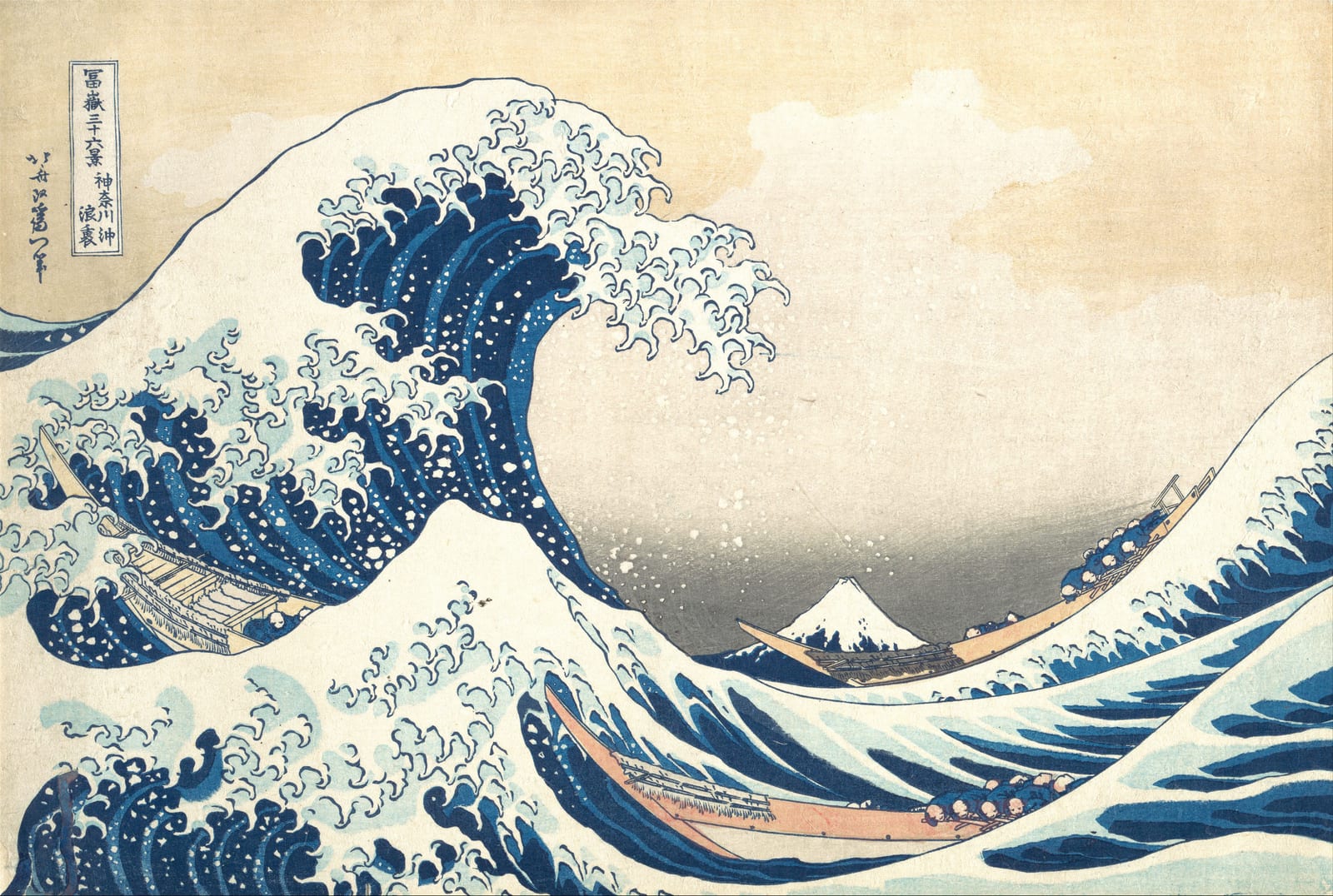
The original
Katsushika Hokusai, Under the Wave off Kanagawa (The Great Wave), c. 1831, Woodblock print, impressions in many collections · Wikipedia
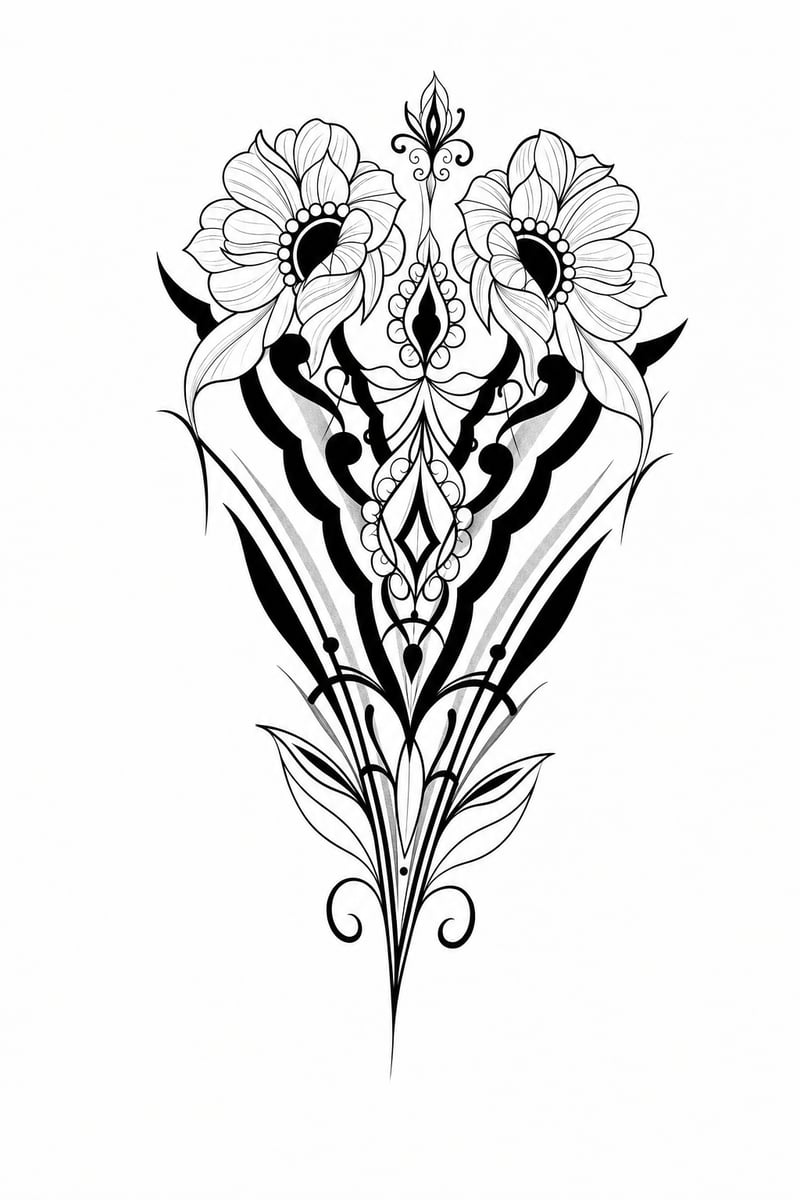
Monica's drawing
Back ornament: anemones on a long spine · Monica, Dark Autumn Studio

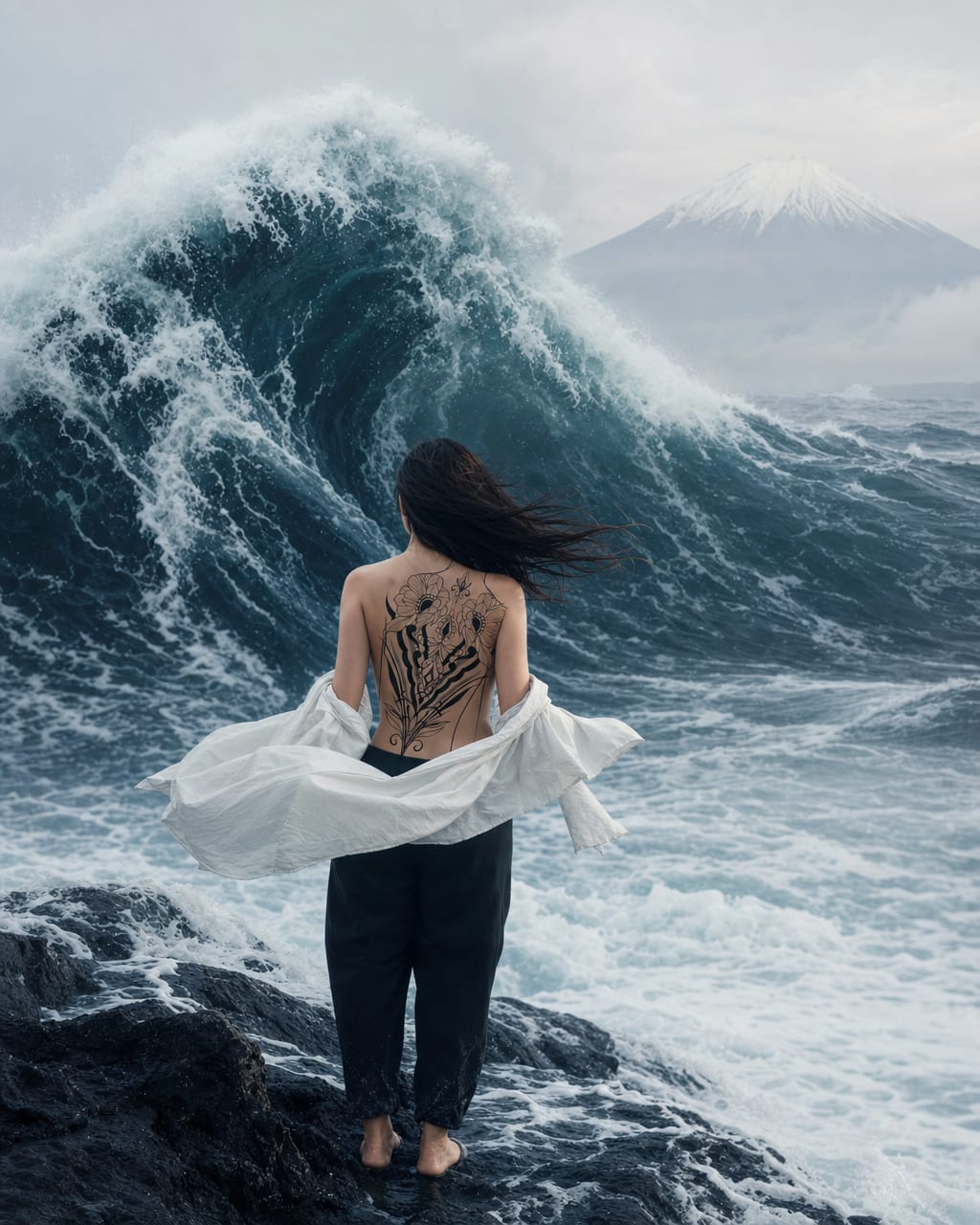
On skin
AI visualisation of a real design. Not a photograph of a tattoo.
The painting
Under the Wave off Kanagawa is not a painting but a woodblock print, made by Katsushika Hokusai around 1831 as the first sheet of his Thirty-six Views of Mount Fuji. Thousands of impressions were pulled, and good ones hang in museums from Tokyo to New York. The blue was Prussian blue, a pigment newly imported into Japan, and Hokusai used it as if he had been waiting for it. The wave fills the sheet. Fuji, the actual subject, is a small white triangle in the distance, and the fishermen in the boats have their heads down.
The design
Monica's back ornament: two anemones at the shoulder blades and a long central spine of lines and black leaves down to the small of the back. A vertical piece that meets the wave at a right angle.
Why this pairing
A print is made to be repeated. A tattoo cannot be repeated: there is one skin, and the line goes in once. Standing with her back to the wave, she is the only thing in the picture that happens once.