How to Price Tattoo Work Without Underselling Yourself
How to price tattoo work without burning out on resentful money. The three pricing models, the maths most artists skip, deposits, raising rates, and the part everyone dreads: talking about money.
Updated June 2026
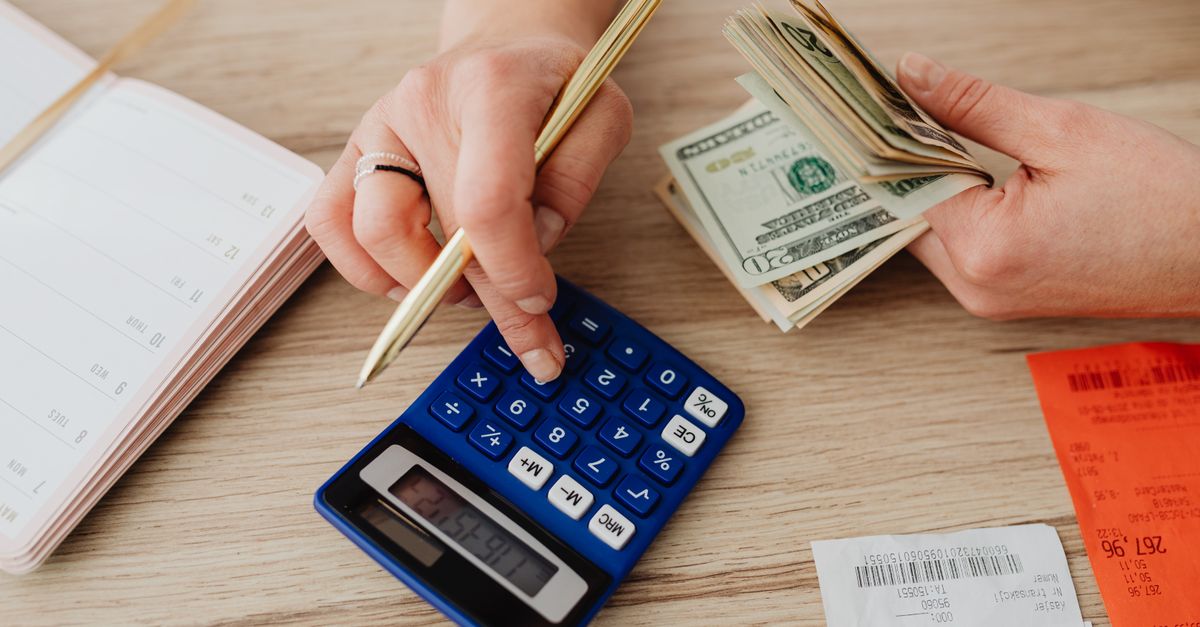
Pricing tattoo work is the business skill artists are trained in least and punished for most. Set your rates too low and you burn out doing great work for resentful money. Set them high without the portfolio to back it and you sit with an empty chair. The sweet spot isn't a magic number. It's a way of thinking about your time, your costs, and your value that pays you properly and keeps your books full. This guide walks through the models, the maths most artists skip, and the part everyone dreads: actually talking about money.
The three pricing models, and when each fits
There's no "correct" structure. There's the one that fits how you work.
- Hourly. You charge per hour, and the final cost follows the time. This is the standard for large, custom, or multi-session work, where time is genuinely hard to predict. It's transparent, and it has a quietly useful feature: it lets clients pace payment, linework one session, shading the next, which makes big projects affordable and keeps them coming back. Published hourly rates vary enormously by country and city (the US market often cites the low-to-mid hundreds in dollars; European rates differ), so treat any number as a regional reference, not a target.
- Flat / per-piece. A fixed total for a defined design. Best for small work and flash, and especially if you work fast, because hourly punishes speed. If you can do a clean piece in an hour that a slower artist takes two hours for, flat-rate pricing means your efficiency pays you instead of costing you. The appeal for clients is certainty: they know the number before they sit.
- Day / half-day rate. A block price for a chunk of time, favoured by busy and established artists for big projects. It looks higher at a glance, so be ready to say what hours and scope it covers.
Most artists end up mixing these, flat for flash and hourly for elaborate custom, which is completely normal.
The shop minimum: your highest-leverage lever
Every studio needs a minimum, a floor price that applies even to a thumbnail-sized tattoo. The reason is pure economics: a fresh sterile needle, single-use supplies, the stencil, setup and breakdown, and the booked slot cost roughly the same whether the piece is two centimetres or ten. Tiny tattoos quietly absorb the most overhead per dollar. They tie up a chair and burn the same setup cost as a big piece.
That's also why, when costs rise, the minimum is the first thing to raise. It's the lowest-friction increase you can make, and it protects you on exactly the jobs that are least profitable. A modest bump to your floor, even 10%, flows straight to your bottom line with almost no client pushback.
Pricing the real cost: time, overhead, and skill
Here's where most underpricing happens: artists price the chair time and forget everything around it. What a client is actually paying for is four things: your skill and experience, the total time invested (consultation, design and drawing prep, and the session itself), your materials and overhead, and your artistic vision (they're buying your ability to realise an idea, not just the mechanical act).
The invisible cost is design time. A custom piece can mean hours of drawing, references, and revisions before you ever pick up a machine, and clients who imagine you "whip something up" the morning of never see it. Either build that time into your rate or charge a separate design/consultation fee, but never give it away for free.
A simple way to find your floor: add up your monthly fixed costs (rent or booth fee, utilities, insurance, software, supplies, sterilisation) and divide by your realistically billable hours. The trap is overestimating the latter. A month isn't 160 tattooing hours. Admin, design prep, no-shows, consultations, and healing-paced gaps eat a big chunk, so your real billable hours might be half of your working hours. Your rate has to cover overhead plus a living wage plus materials across those actual billable hours. That's your cost-plus floor. Market and value sit on top of it. As a rough sense-check, materials and overhead commonly run 40 to 50% of a tattoo's price; if yours is much higher, your rate is too low. A crude but real heuristic many use: as rent roughly doubles, the rate roughly doubles too.
Revisit these numbers at least quarterly. Costs creep; your prices should keep pace.
Deposits
A deposit does two jobs: it secures the slot and it pays for the design work you do before the appointment. Make it non-refundable (that's the entire point) and deduct it from the final total, so it isn't an extra charge, just money paid early. Amounts vary by market, but a set fee (commonly in the €50 to €150 range) or a percentage of the total (often around 25 to 30%) is typical. Tie it to the booking or consultation, and a clear deposit policy quietly filters out the time-wasters and no-shows that otherwise bleed your calendar dry.
Raising prices without losing clients
This is the one artists avoid, and avoiding it is how careers stall. Undercutting yourself for years doesn't make you generous. It makes you exhausted and resentful, which blocks the creativity you got into this for. Underpricing also drags down the whole industry and, perversely, attracts the wrong clients: people shopping on price alone rarely value your time.
The 2026 backdrop makes raises easier to justify. Demand is high, waitlists are long, and supply and rent costs have climbed. Many artists have raised rates 10 to 25% this year, and many were overdue. A calendar booked three to six months out is itself proof that your supply is scarce and your prices have room to move.
How to do it without bleeding your good clients:
- Review annually at minimum, and adjust deliberately rather than in a panic.
- Give existing clients advance notice: surprise increases feel like betrayal; warned ones feel fair.
- Grandfather anyone already booked. Honour quotes and deposits taken at the old rate. This single courtesy buys enormous goodwill.
- Frame it as value, not apology. Your experience has grown, your portfolio is stronger, your equipment and safety standards have improved, your costs have risen. Raising prices is a sign of growth, not greed; say it like you believe it, because it's true.
- Lead with the minimum, your lowest-friction lever.
And accept the part that feels scary: you will lose some bottom-end, price-shopping clients. That's not a failure. It's the mechanism working. Every cheap-job slot you free up is capacity for better-fit, higher-value work and a healthier you.
The apprentice-to-pro curve
Pricing isn't static across a career, and pretending to be further along than you are backfires. Early on, as an apprentice or newly out, you charge less, often around half of established artists' rates, sometimes cost-only or free pieces while you build a body of work and clients who don't mind less experience. That's legitimate and smart. The mistake is staying there. Once you've got clean lines and solid shading, start raising, and keep raising as your portfolio proves it. Be honest about your level the whole way; clients trust an artist who's upfront far more than one who oversells.
Talking about money
Most of the discomfort around pricing isn't the number. It's the conversation. The fix is to make the conversation happen before the needle, in writing, with confidence.
Put your rate, your minimum, your deposit policy, and your design-fee approach where clients see them (bio, site, booking form), so the price is never a surprise and you're never negotiating in the chair. Quote clearly up front, including a realistic range for unpredictable work.
When someone asks "can you do it cheaper?", the professional move is to adjust the scope, not the rate: a smaller piece, a simpler design, or fewer sessions, rather than discounting your hour. Reflexive discounting signals that your stated price wasn't real, and it trains clients to haggle. It's completely fine to hold firm, and completely fine to politely decline a budget that doesn't fit your work.
Where it helps, transparency disarms sticker shock: when a client balks, briefly explaining what goes into the price (the design hours, the sterile single-use supplies, the years behind the machine, the overhead) turns "why so much?" into "ah, that makes sense." You're not justifying yourself; you're educating, and educated clients are better clients.
The bottom line
Pricing well is just refusing to lie to yourself about what your time and work are worth. Pick the model that fits how you tattoo, set a minimum that actually covers your overhead, price in the invisible hours, protect your calendar with deposits, and raise your rates on a schedule rather than waiting until you're burnt out and bitter. Handle the money talk up front and in writing so it never lands in the chair. Do that, and the clients who stay are the ones who value the work, which, in the end, is the only kind worth having a full calendar of.
Key Takeaways
- Choose a pricing model that fits how you work: hourly, flat per-piece, or a day rate.
- A shop minimum is essential, because setup costs barely shrink with size, and it is your lowest-friction lever.
- Price the invisible hours too: consultation, design and drawing prep, materials, and overhead.
- Find your floor from monthly fixed costs divided by realistically billable hours, then add value on top.
- Use non-refundable deposits, deducted from the total, to protect your calendar.
- Raise prices on a schedule, give notice, and grandfather clients already booked.
- When asked to go cheaper, adjust the scope rather than discounting your rate.