After Klimt: Judith
A gold collar at the throat, a flaming heart on the sternum. Klimt's Judith, the morning after.
Gustav Klimt · 1901 · Belvedere, Vienna

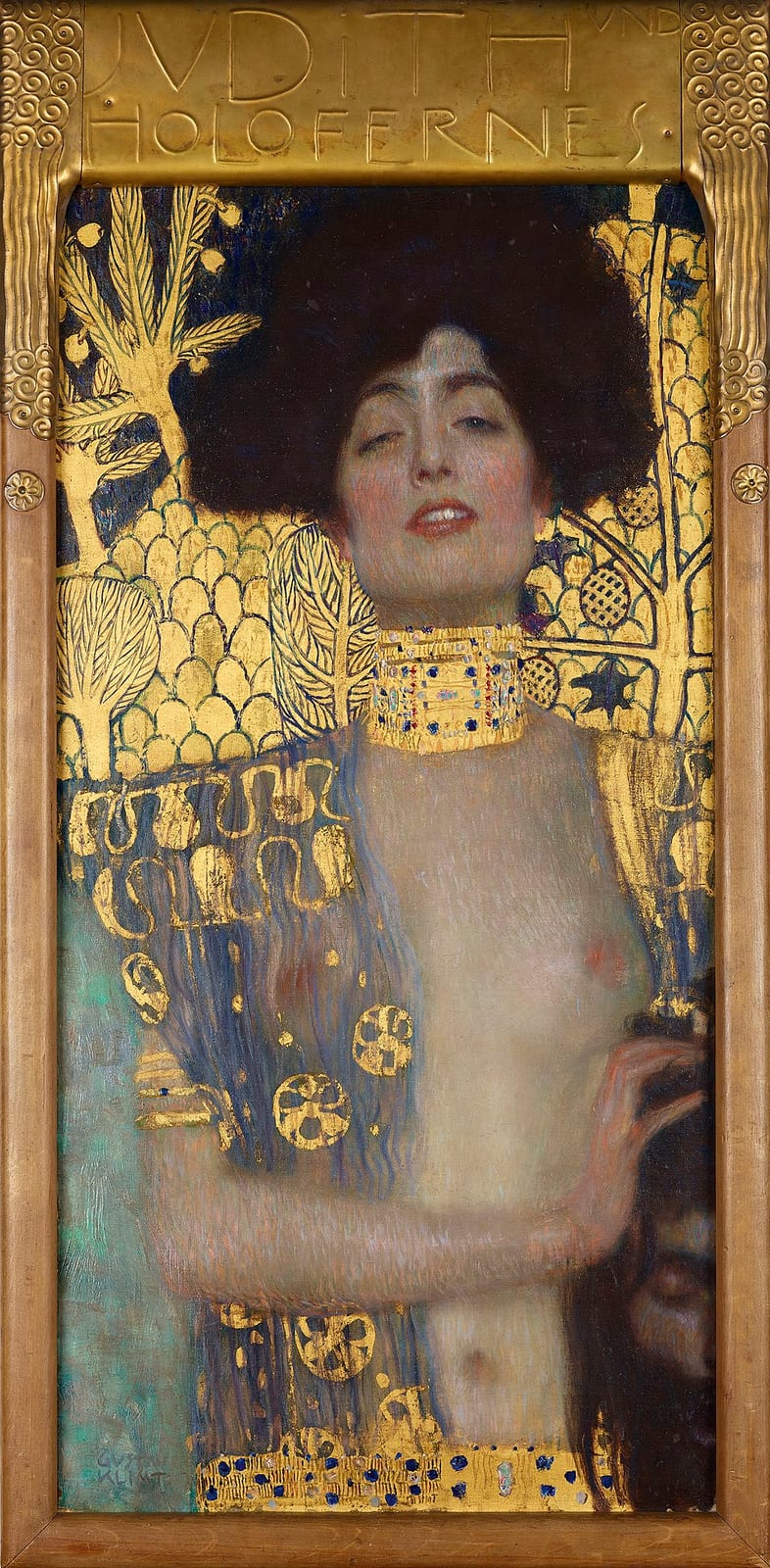
The original
Gustav Klimt, Judith and the Head of Holofernes (Judith I), 1901, Belvedere, Vienna · Wikipedia
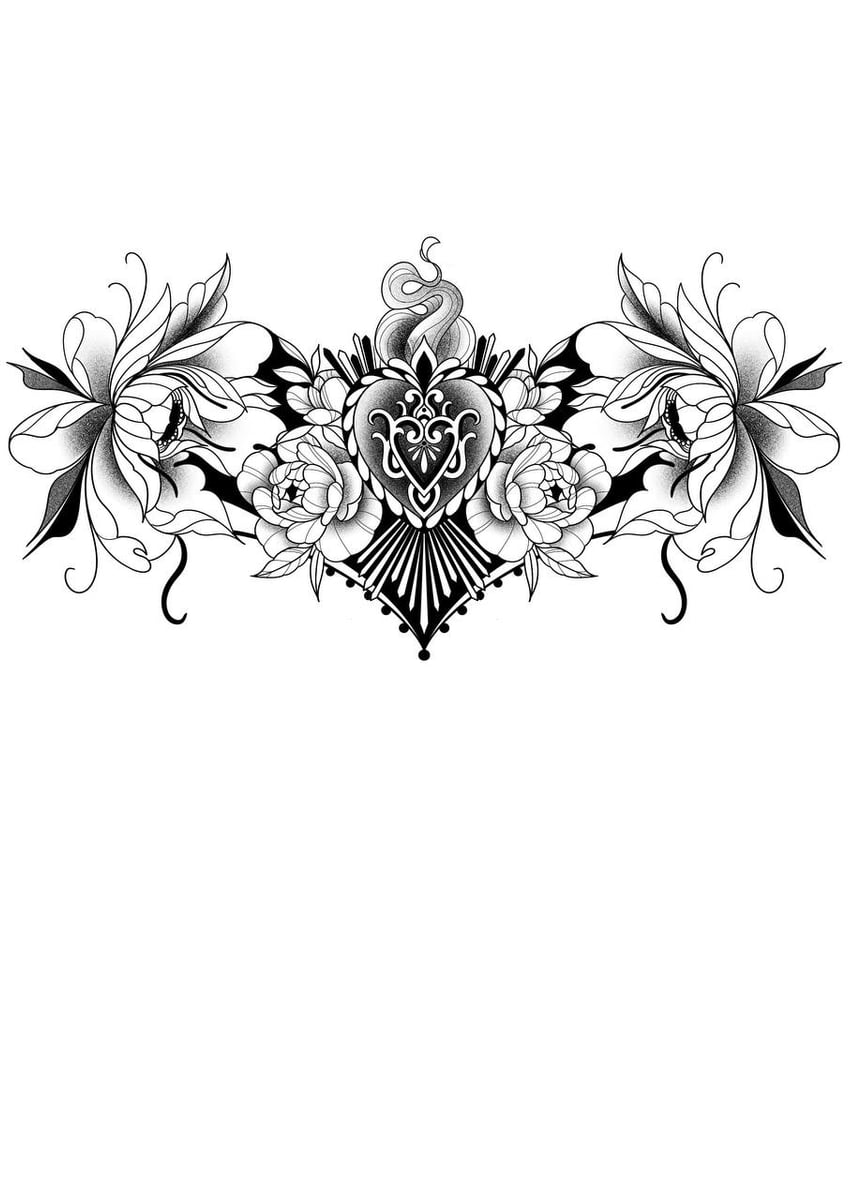
Monica's drawing
Sternum piece: flaming heart, peonies and lilies · Monica, Dark Autumn Studio

On skin
AI visualisation of a real design. Not a photograph of a tattoo.
The painting
Gustav Klimt painted Judith and the Head of Holofernes in 1901; it hangs in the Belvedere in Vienna. The gold frame with the title hammered into it is by his brother Georg. The model is thought to be Adele Bloch-Bauer, who would later sit for the golden portrait everyone knows. Look at the lower right corner: that is the head of Holofernes, half cut off by the edge. Klimt does not paint the killing. He paints the moment after, eyes half closed, lips parted, and a gold collar sitting exactly where a tattoo artist would start.
The design
Monica's sternum piece: a flaming heart wrapped in filigree, peonies to either side, and a drop of lace and dots falling toward the ribs. Two large lilies reach out to the shoulders. It sits in the centre of the chest, below the collarbones, and reads clearly in a low neckline or an open shirt.
Why this pairing
Klimt gave her a collar of gold. We give her a heart of ink in the same place, one hand's width lower. The burning heart is an old Catholic symbol of a love that costs something. On Judith it is not decoration. It is a receipt.