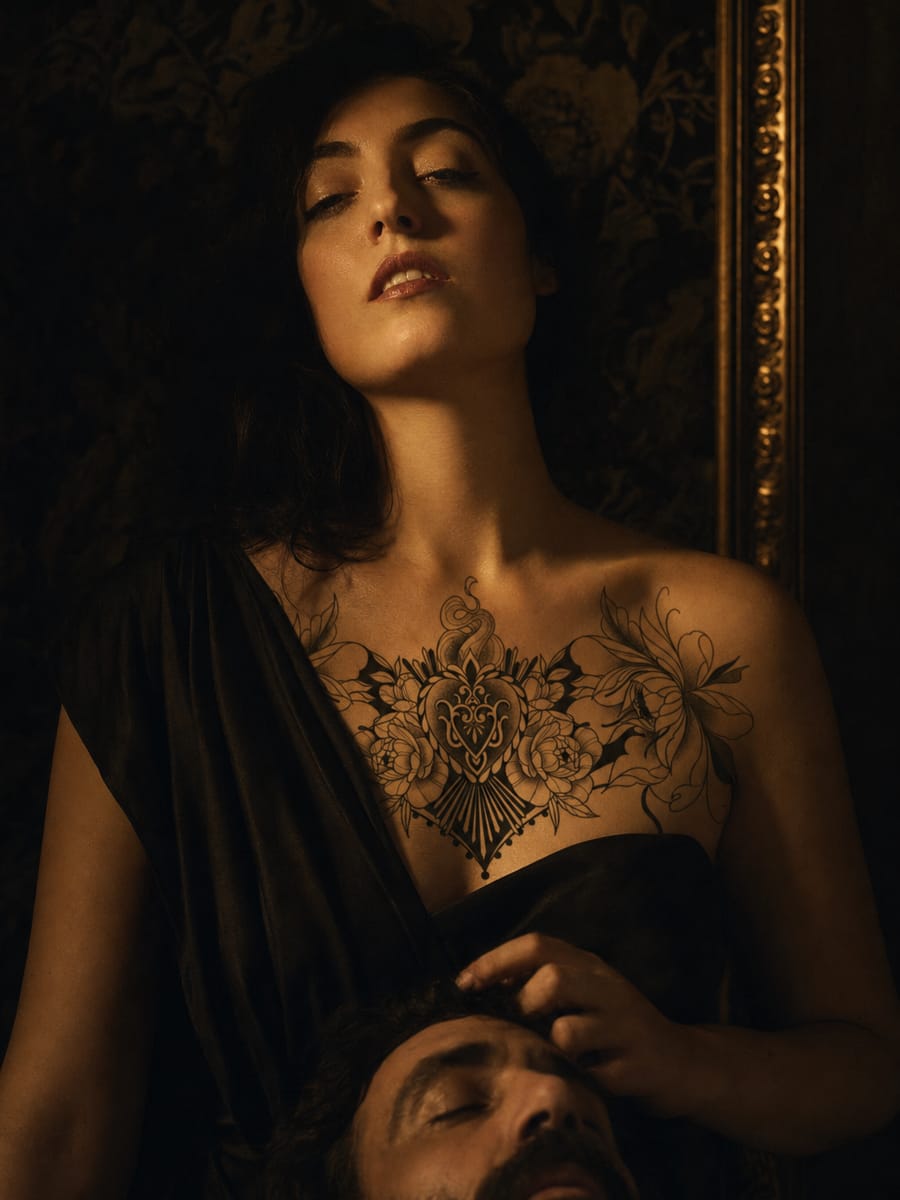
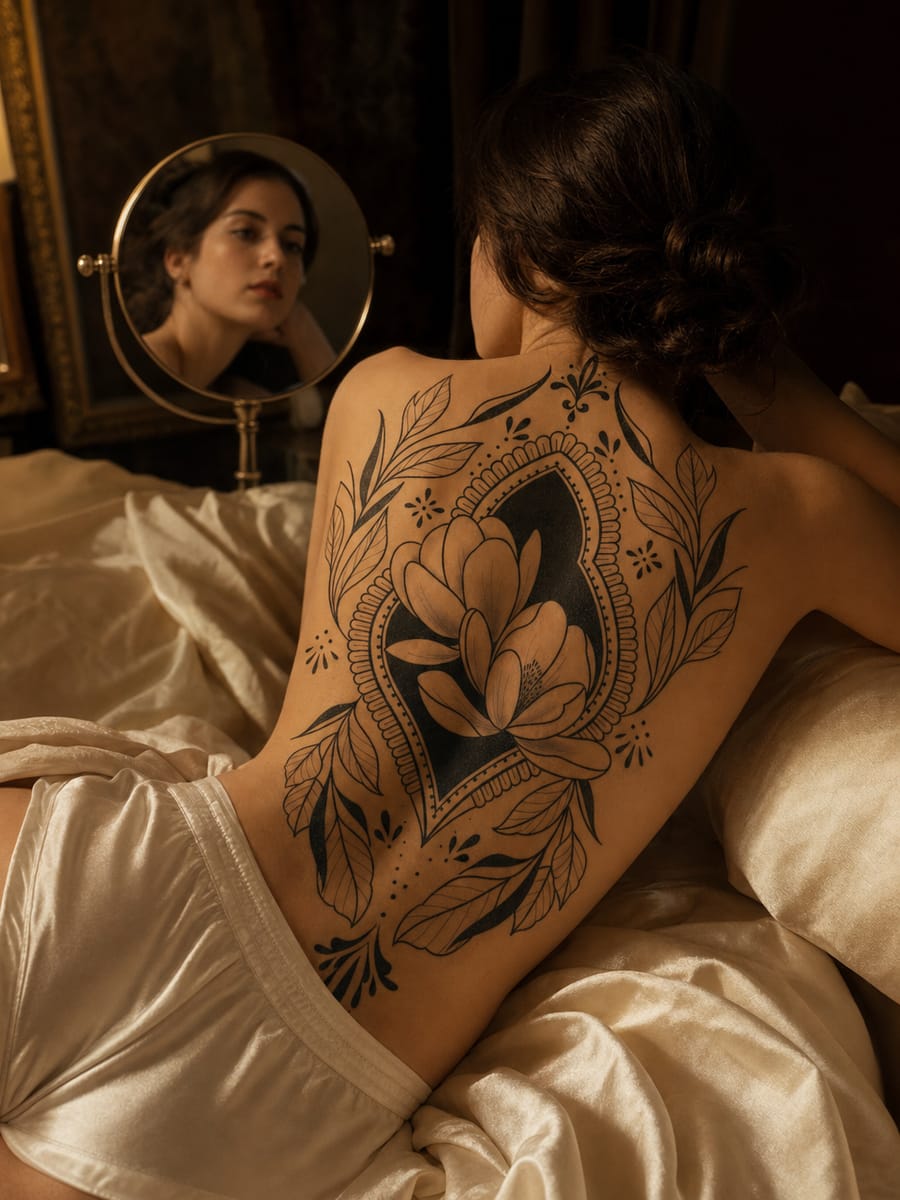
After Caravaggio: Bacchus
A street kid as the god of wine, with dirty fingernails and fruit already turning. We let a woman take the seat.
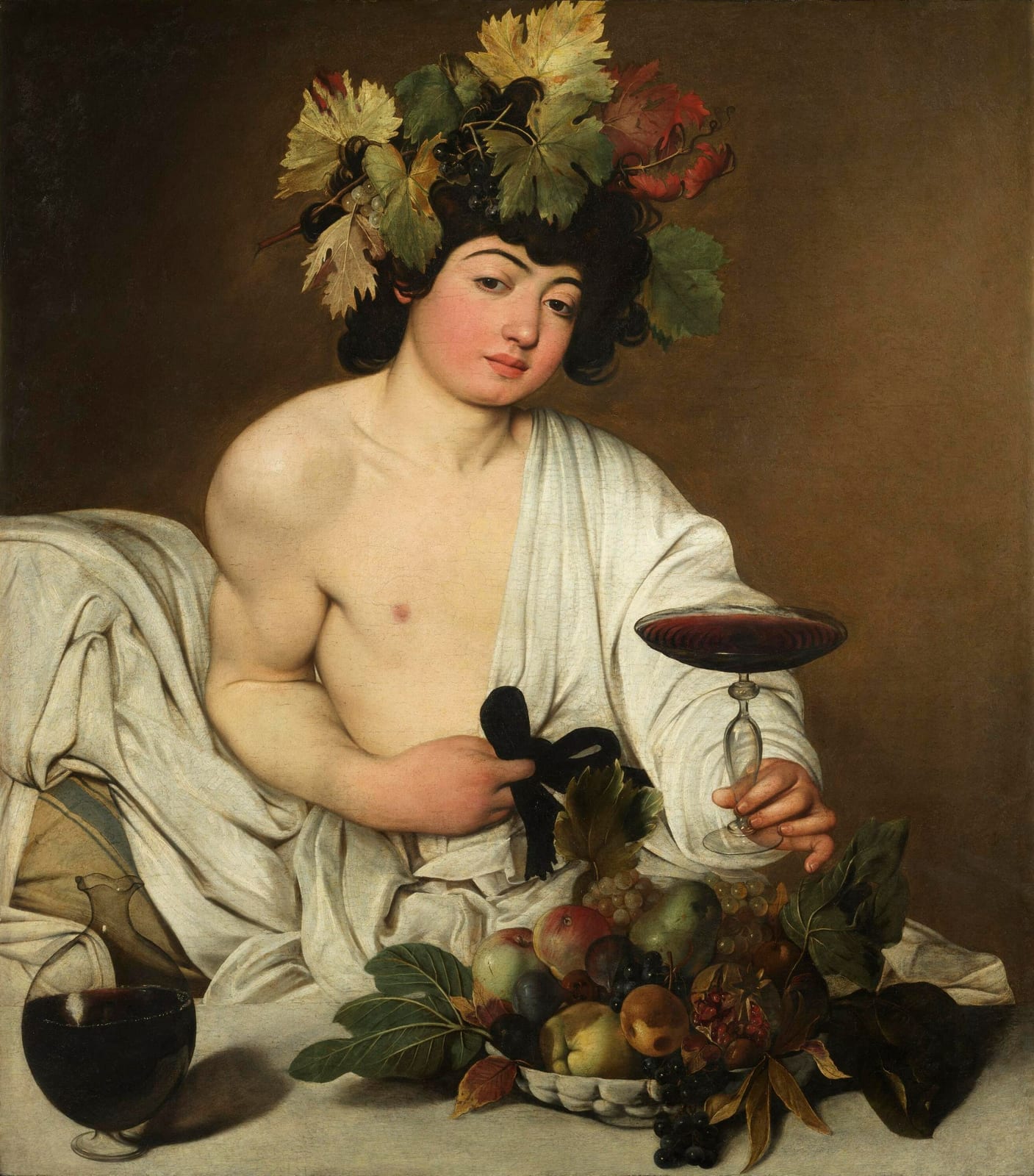
Caravaggio · c. 1596 · Uffizi, Florence
The original
Caravaggio, Bacchus, c. 1596, Uffizi, Florence · Wikipedia
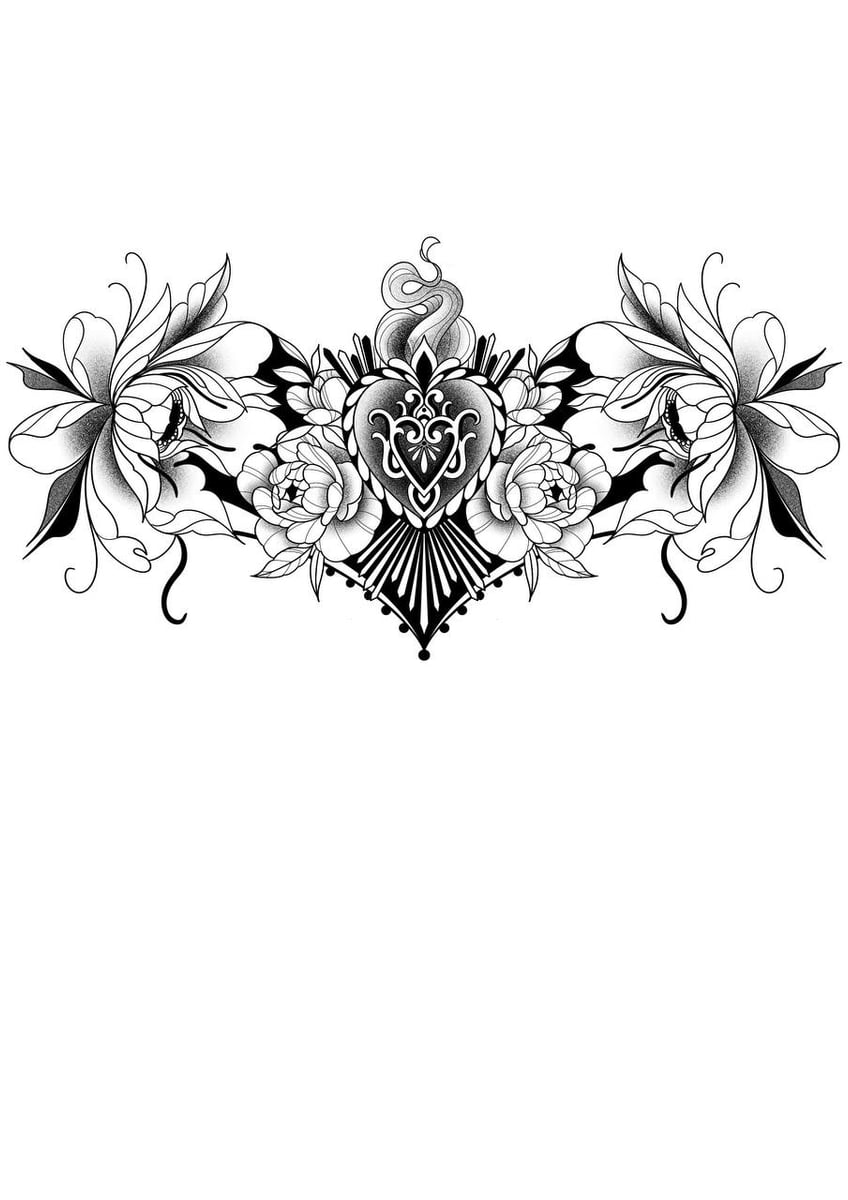
Monica's drawing
Sternum piece: flaming heart, peonies and lilies · Monica, Dark Autumn Studio
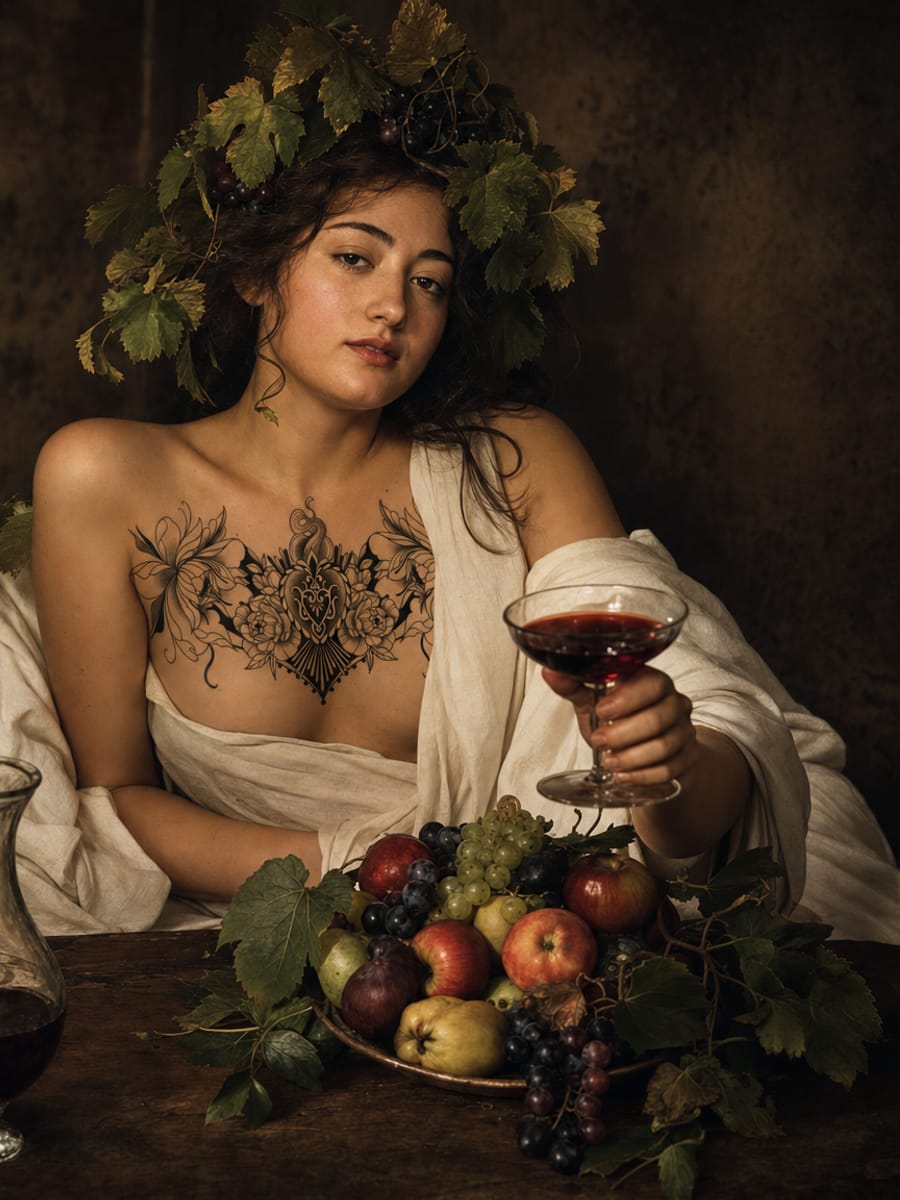
On skin
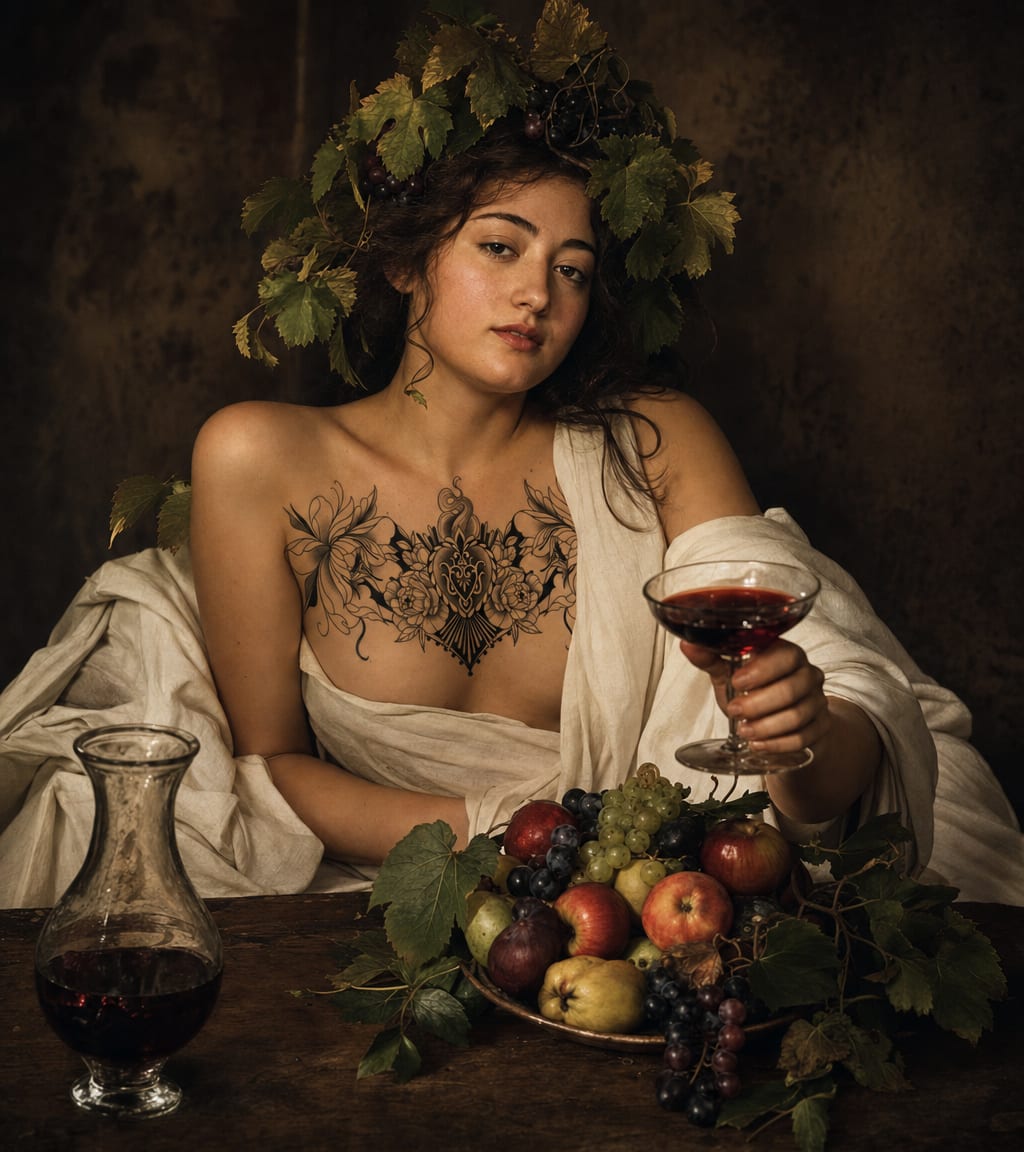
AI visualisation of a real design. Not a photograph of a tattoo.
The painting
Caravaggio painted his Bacchus around 1596 for Cardinal del Monte; it hangs in the Uffizi in Florence. The god of wine is a Roman boy in a bedsheet with a wreath of vine leaves, flushed cheeks and fingernails that have not been cleaned. The fruit in the bowl is already going off. He holds the glass out to you with his left hand, a mirror image, the way a painter sees himself. In 2009 restorers found what that implies: a tiny reflection of Caravaggio at his easel in the glass carafe.
The design
Monica's sternum piece, the flaming heart with peonies and lilies, across the centre of the chest. The robe already falls open in the painting; the design uses exactly the skin Caravaggio exposed.
Why this pairing
Bacchus has always been about surrender: wine, fruit, a loosened robe. The heart in the middle of the chest turns that into a decision. Our Bacchus is a woman, which is not a correction of Caravaggio but a reminder that he painted whoever was in the room.