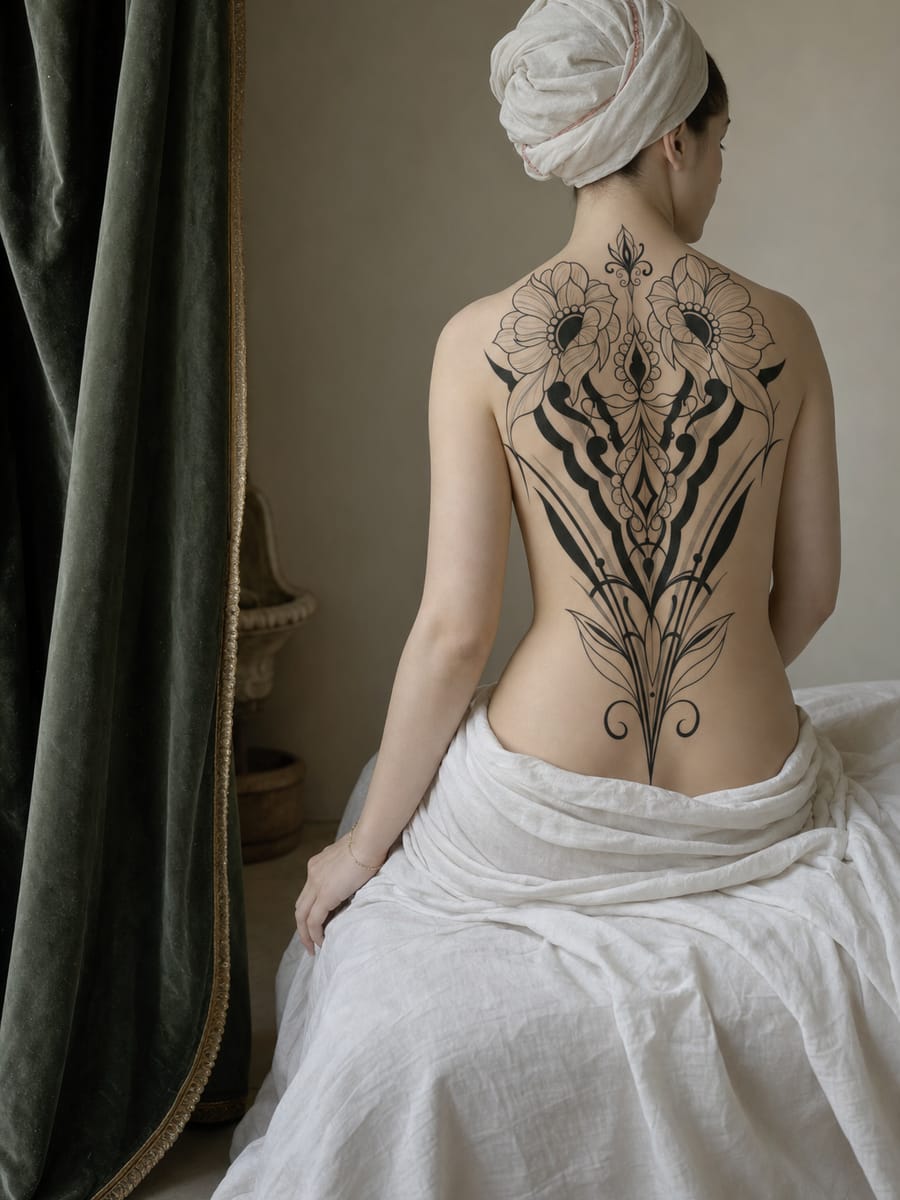
After Millais: Ophelia
She sings while she sinks, every flower a message. We let her breathe, and give her a sleeve that does not float.
John Everett Millais · 1851–52 · Tate Britain, London

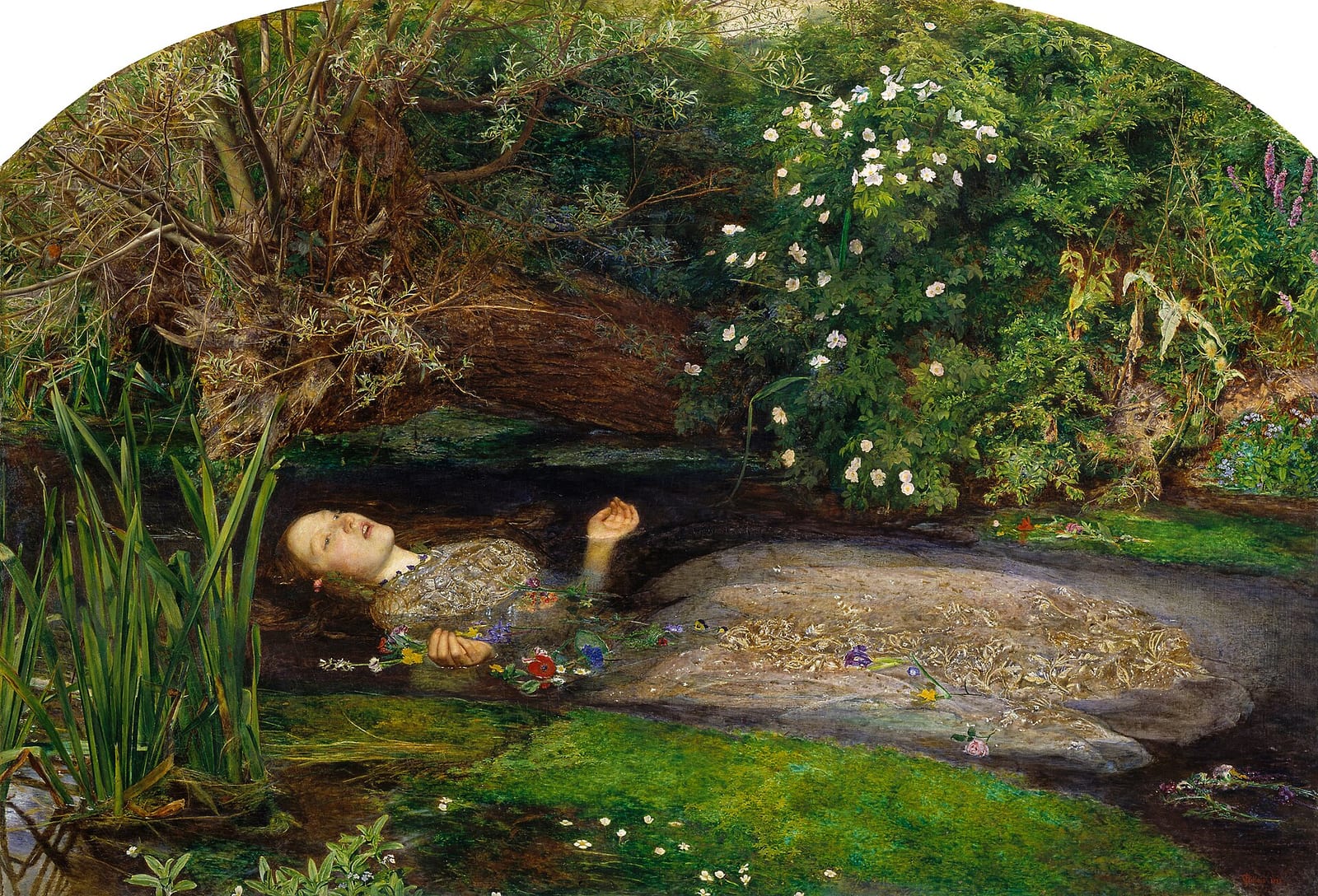
The original
John Everett Millais, Ophelia, 1851–52, Tate Britain, London · Wikipedia
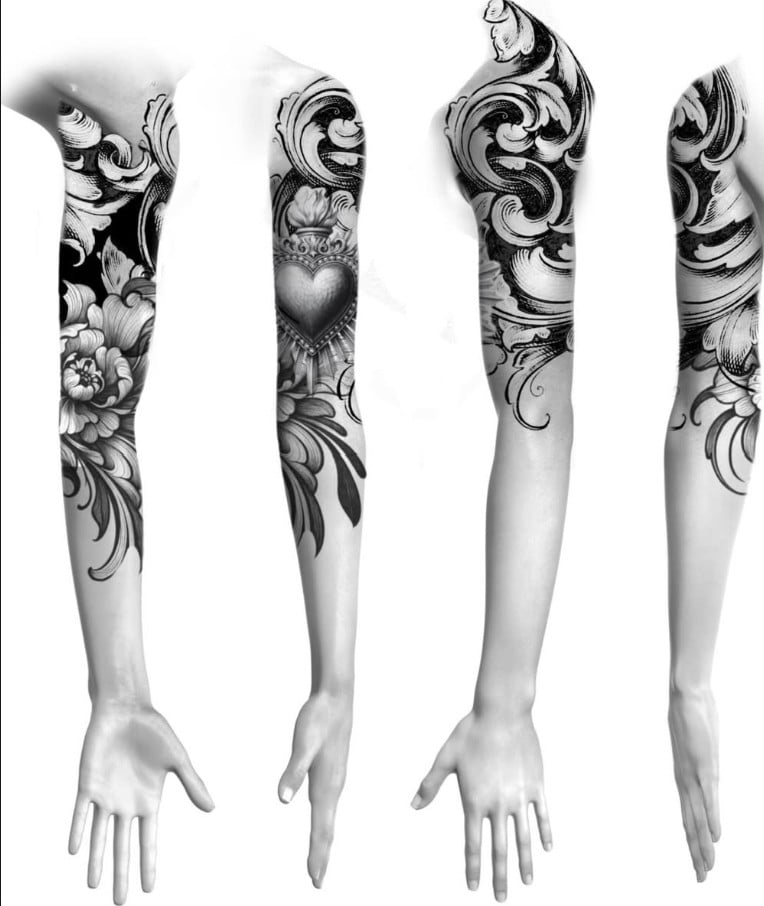
Monica's drawing
Baroque sleeve: acanthus, flaming heart, peony · Monica, Dark Autumn Studio

On skin
AI visualisation of a real design. Not a photograph of a tattoo.
The painting
John Everett Millais painted Ophelia in 1851 and 1852; it hangs in Tate Britain. He spent months on a riverbank in Surrey painting the plants first, then had Elizabeth Siddal lie in a bath in his studio, kept warm by oil lamps underneath. The lamps went out, she caught a bad cold, and her father sent the painter the doctor's bill. Every flower is botanically exact and means something: poppies for death, violets for faithfulness, daisies for innocence, pansies for thought. Shakespeare's Ophelia sings as she drowns. Millais paints the song.
The design
Monica's baroque sleeve on the left arm: acanthus scrollwork, a flaming heart on the upper arm, a peony opening on the forearm, black negative ground between the scrolls.
Why this pairing
In the painting she is already gone, open-eyed, carried by the water. In ours she is awake and looking back, and the sleeve is the one part of her that does not drift.