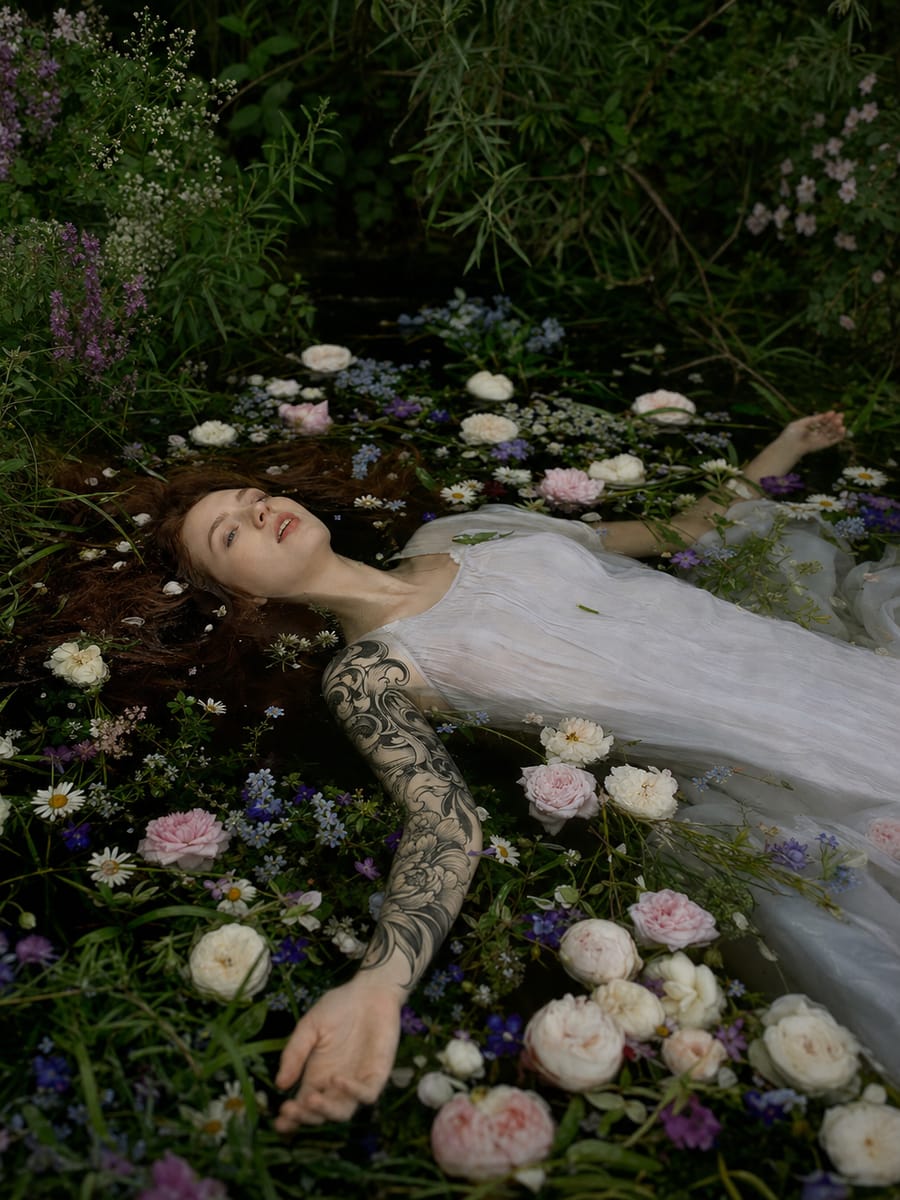
After Ingres: The Valpinçon Bather
The most famous back in French painting, and the painter never let it go.
Jean-Auguste-Dominique Ingres · 1808 · Louvre, Paris
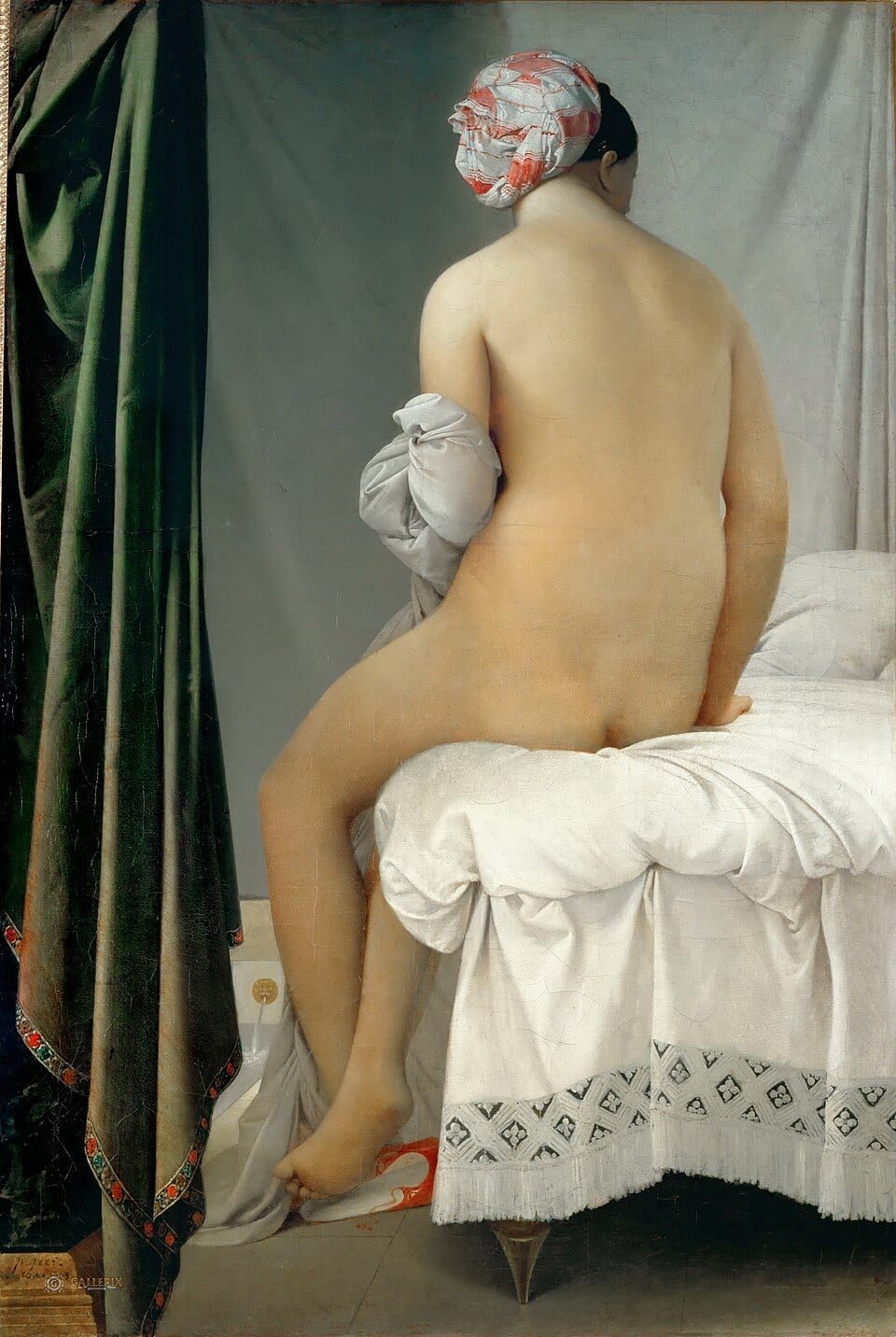
The original
Jean-Auguste-Dominique Ingres, The Valpinçon Bather, 1808, Louvre, Paris · Wikipedia

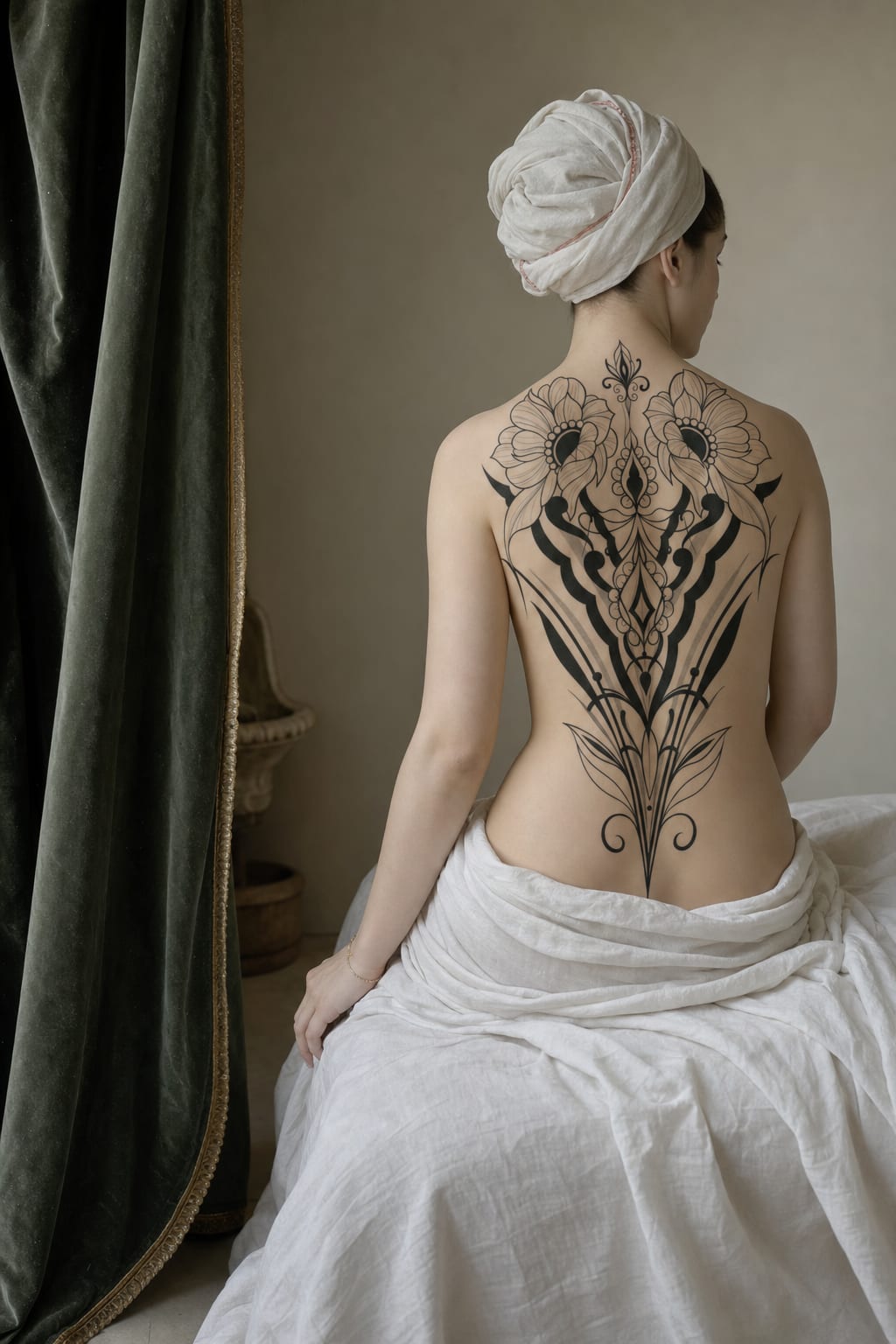
Monica's drawing
Back ornament: anemones on a long spine · Monica, Dark Autumn Studio
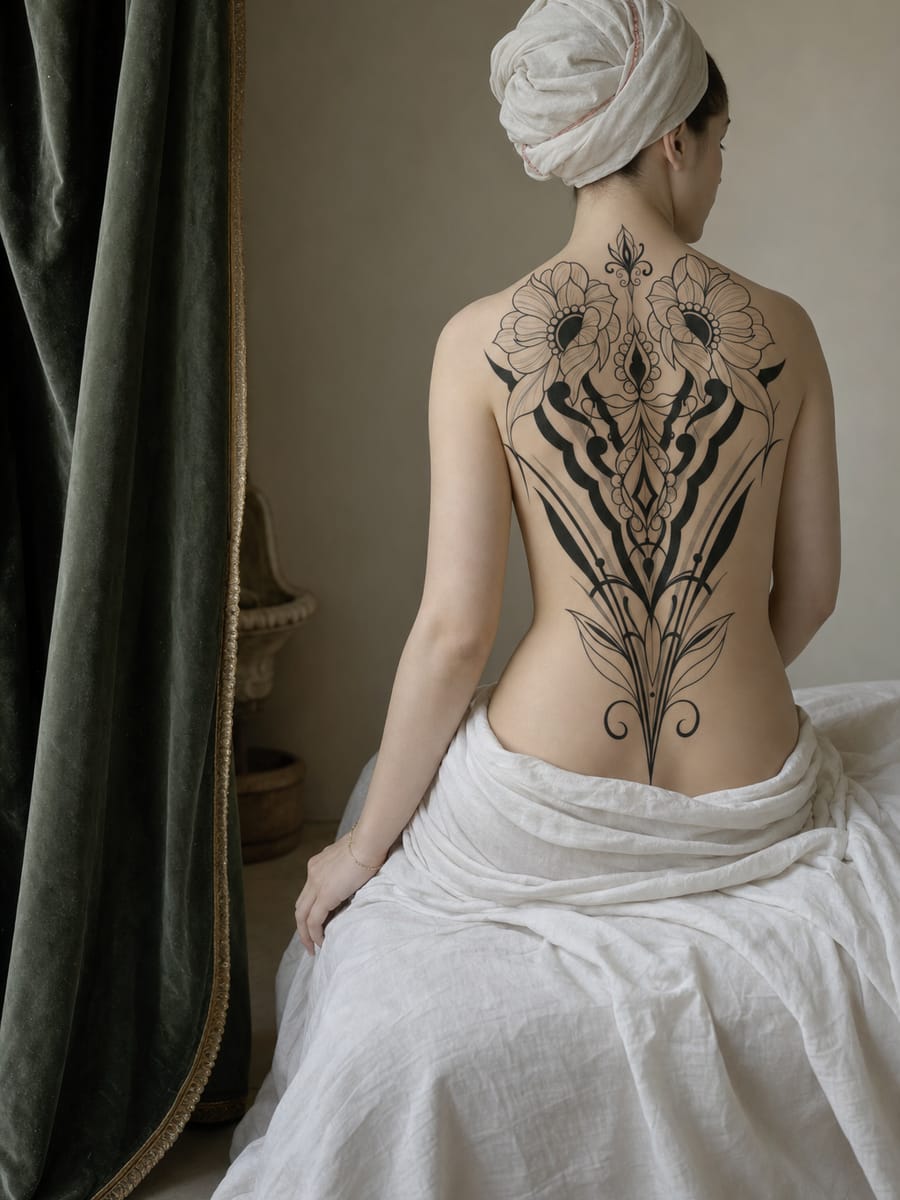
On skin
AI visualisation of a real design. Not a photograph of a tattoo.
The painting
Jean-Auguste-Dominique Ingres painted the Bather in Rome in 1808, at twenty-eight, as one of the works he owed the Academy for his scholarship. It hangs in the Louvre and takes its name from a later owner, Valpinçon. A woman sits on a bed with her back to us, a turban wound around her head, a green curtain to the left. The anatomy is softened, the skin too smooth, the light too even, and nobody has ever minded. Ingres painted this back again in the Turkish Bath, fifty-four years later. He was eighty-two.
The design
Monica's back ornament: two anemones at the shoulder blades, a long central spine of fine lines and black blade-shaped leaves, a diamond at the centre and scrolls at the small of the back. A design for a straight spine and a long back.
Why this pairing
Ingres spent a lifetime returning to one back. Put something on it and you understand him: it was always a surface waiting for a line.