The Weight of the Unseen: Why Behind-the-Ear Placements Hit Different
The smallest placements are rarely accidents. Behind the ear is one of the most considered spots on the body, and understanding why tells you something true about how tattoos carry meaning.
By GoldSeam Editorial·17 July 2026
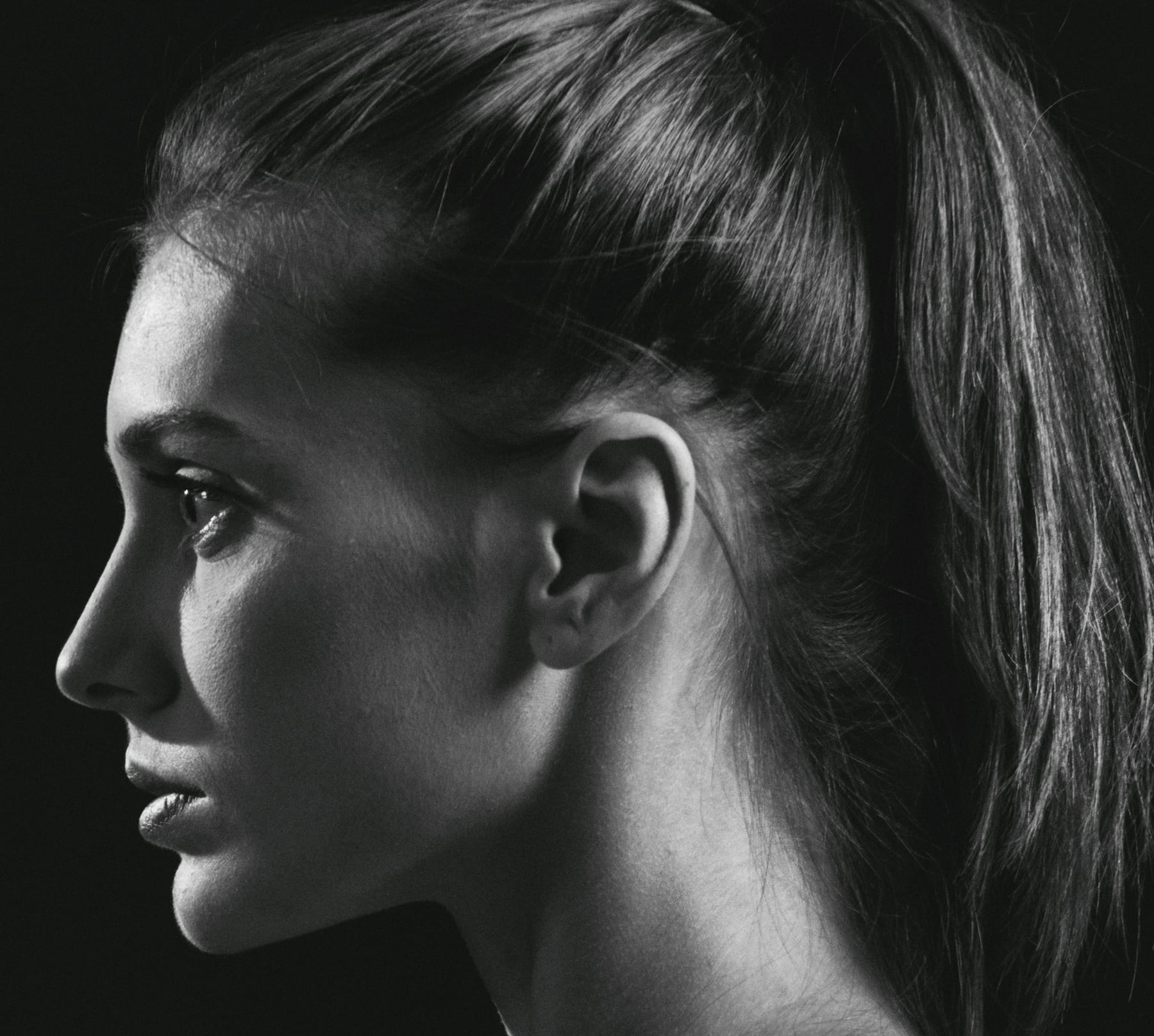
There is a particular kind of tattoo that does not announce itself. It waits. It is found by someone close enough to lean in, or by you, in a mirror, on a morning when you happen to look. Behind the ear is that tattoo. And far from being a compromise, that quality of hiddenness is precisely what draws people to it.
The placement is chosen. Never settled for.
Why the Space Works as Composition
The anatomy here is doing real design work. The curved surface behind the ear creates a natural frame, a gentle concavity that holds a small motif the way a setting holds a stone. The skin follows the line of the skull, which means motifs that echo that curve, botanical stems, arcs, single glyphs, read with an organic rightness that larger, flatter placements can't replicate.
But the space is tight, and tightness is an editorial force. Nothing decorative survives here. Complexity collapses. Dense shading muddies. Heavy fill fights the scale and loses. What the space demands is a single, strong silhouette: one idea, resolved cleanly, at roughly two to four centimetres. That is not a design limitation. It is a design instruction.
The constraint is the brief.
The Style Families That Hold Here
Not every tattooing approach translates to this scale. A few do, consistently and well.
- Single-needle linework keeps fine detail readable without crowding the skin. The precision is the point.
- Minimalist blackwork reads cleanly at small scale, relying on silhouette rather than texture.
- Fine-line botanicals follow the natural curve of the skull, which makes them feel like they belong rather than sit.
Styles that rely on heavy fill, dense colour fields or complex shading rarely survive the transition to this size. The motif either loses legibility or the skin rejects the density over time. A good artist working in this space will tell you that editing before the needle touches the skin is part of the craft.
The Psychology of the Edge
Placement is never just an aesthetic decision. It carries a psychology, and behind the ear has a very specific one.
The spot sits at the edge of visibility. In most social situations, in most clothes, with most hair, it is invisible. You control its audience completely. You decide, through proximity and context, who gets to see it. That is a meaningful kind of power, and research on identity and self-disclosure suggests that the objects and marks we keep semi-private often carry more personal weight than the ones we display openly. The private marker, seen only in chosen moments, tends to be the one that matters most to its wearer.
Psychologists who study self-expression sometimes frame this as the difference between performance and possession. A visible tattoo can become part of how others read you. A hidden one belongs entirely to you, and occasionally to the people you let close. That tension, between public self and private mark, is part of what makes this placement so persistently appealing to thoughtful collectors.
Not every tattoo is made to be seen by a room. Some are made to be discovered: a glance, a moment of proximity, a small intimacy extended to someone who earned it. Behind the ear is that offer, held quietly against the skull, waiting.
Before You Book
If you are still deciding on placement, the question worth sitting with is not just what do I want? It is who is this for, and when? A tattoo that lives at the edge of visibility asks you to be clear about that. The artists who work this space well will ask you the same thing, because the placement and the motif need to agree with each other and with your answer.
The smallest placements carry the most weight because they demand the most intention. That is the whole point.
Mark what mattered.