Tattoo Symbolism and Meaning: Five Traditions That Still Speak Through Skin
Every tattoo style that lasts is built on something older. From kintsugi’s golden cracks to the botanical illustrators who taught us how to really look at a flower, these five traditions explain where tattoo symbolism actually comes from and why it still matters on skin.
By GoldSeam Editorial·22 April 2026
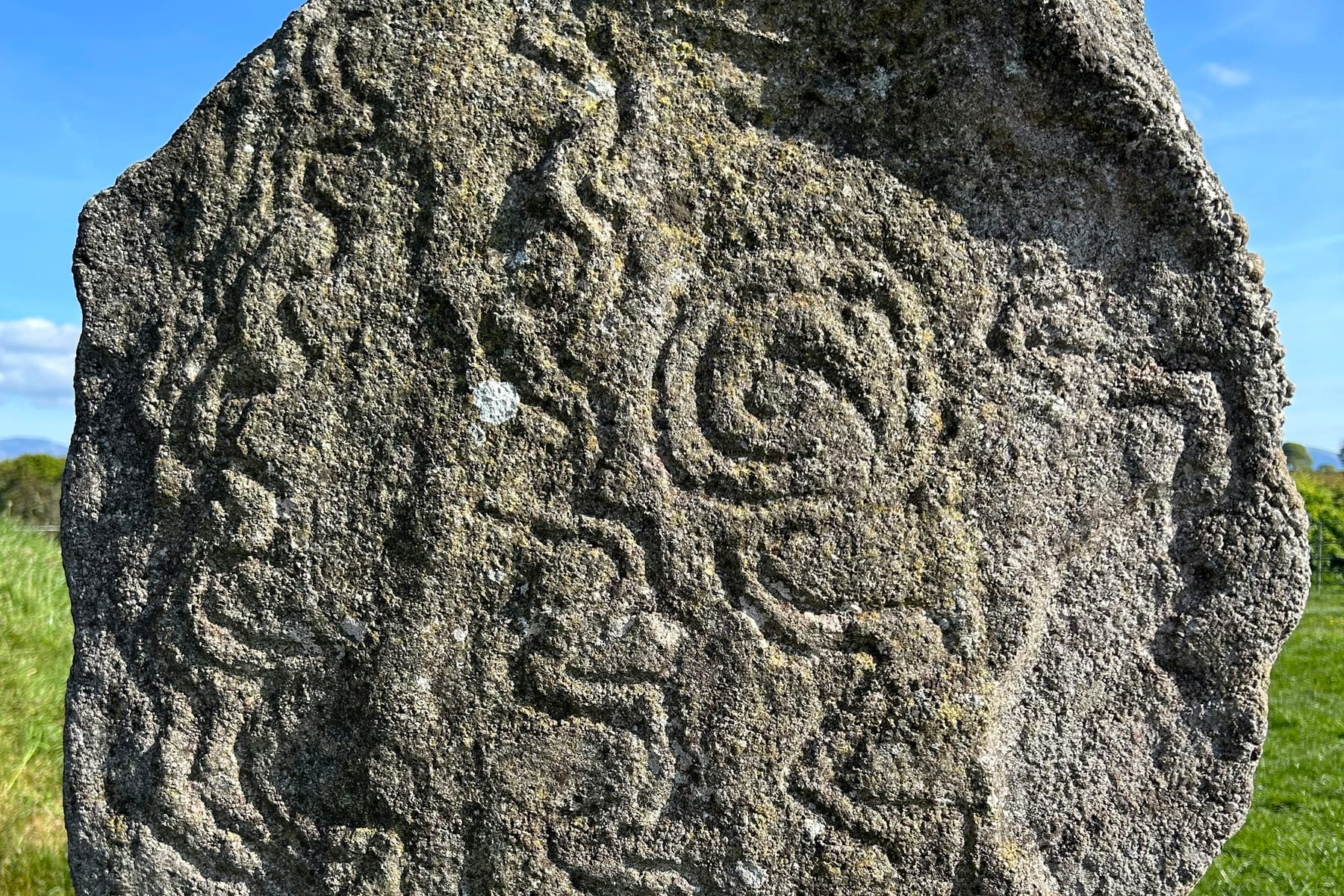
Tattoo symbolism and meaning rarely start with tattooing itself. Behind any design that actually resonates — that makes someone pause, reconsider, come back to sit with it a while longer — there is usually something ancient underneath. A visual language that existed long before tattooing turned it into a trend, and that will still exist long after this particular aesthetic cycle has passed.
These are five traditions worth knowing. Not to copy them, but to understand what makes them last.
Kintsugi — The Art of the Golden Repair
In fifteenth-century Japan, a broken tea bowl belonging to a shogun was sent to China for repair. It came back held together with metal staples. It was still functional, but ugly. Japanese craftsmen, unsatisfied, developed something else instead: kintsugi, the practice of repairing broken ceramics with lacquer mixed with gold, silver, or platinum.
The philosophy is what stays with people. Kintsugi treats breakage as part of an object's history. As something to illuminate rather than hide. The crack filled with gold doesn't diminish the bowl. It becomes the most interesting thing about it.
The same logic runs under a lot of tattooing. Nearly everyone who sits down for a piece is carrying something deeper than just body ornamentation: a transition, a closed chapter, something they're trying to reclaim. A tattoo's meaning often has less to do with decoration and more to do with what it's repairing. Work that engages with someone's history instead of ignoring it tends to mean something years later, in the way kintsugi means something centuries later.
It’s also why cover-up work, done with real care, is some of the most demanding tattooing there is. The constraint becomes the idea.
Celtic Knotwork — The Line That Never Ends
Celtic knotwork comes out of the illuminated manuscripts of early medieval Ireland and Britain. It’s the art of interlaced patterning with no visible start and no end, made by monks who understood a line could carry meaning beyond just its direction.
The unbroken line is the whole point. In Celtic tradition it stands for continuity: of life, of spirit, of connection across generations. The eye follows it inward and can never quite find where it began.
What makes knotwork instructive is its discipline. Every intersection is deliberate. The negative space matters as much as the line itself. There's no room for a careless stroke — the geometry won't allow it.
The Book of Kells rewards this kind of close attention. Not as something to reproduce, but as evidence of what a visual tradition looks like when it's been pushed to its absolute limit by people who had nothing else to do but make it perfect.
The Botanical Tradition — Nature as the First Illustrator
Before photography, before offset printing, the way people documented the natural world was by hand. Botanical illustrators from the sixteenth to nineteenth centuries — working for universities, explorers, royal gardens — built a visual language of real precision: the cross-section next to the whole flower, the root next to the bloom, science and beauty held in the same breath.
Nature has always been one of tattooing's primary references. The real question is which version of nature is actually being worked from.
The difference between a good botanical tattoo and a great one usually comes down to this: the great one looks like it was drawn by someone who genuinely looked at a flower — how the petals meet the stem, how a leaf unfurls, where the light lands and where it doesn't. This is the whole foundation of fine line botanical work, and it's why so many serious artists keep returning to that tradition of looking rather than working from a quick reference photo.
Redouté's roses. Audubon's birds. Maria Sibylla Merian's insects. These artists looked at living things closely enough that their work still teaches us how to see, two hundred years on.
Sacred Geometry — The Mathematics Underneath Everything
Long before it became a genre of tattoo flash, sacred geometry was a much older human project — the attempt to find, inside mathematical relationships, some evidence of order underneath existence. The mandala in Tibetan Buddhism. The Flower of Life, appearing independently across Egyptian, Indian, and Renaissance European sources. The Golden Ratio showing up, uninvited, in a nautilus shell, a sunflower, a spiral galaxy.
What these forms share is that nobody invented them. They were discovered. Working with sacred geometry means working with something that exists outside of any one culture or moment, which is probably why it keeps resurfacing across so many of them.
Few artists use sacred geometry directly in every piece, but the discipline behind it (the compass work, building complex forms out of simple ratios) shapes how structure gets seen in everything else.
Ukiyo-e — The Woodblock and the Skin
The link between Japanese woodblock printing and tattooing isn't a coincidence. Woodblock masters of the Edo period — Hokusai, Hiroshige, Kuniyoshi — developed a visual language that fed directly into the development of irezumi. Bold outlines, flat fields of colour, deliberate use of negative space, figures set against water, wind, or pattern: these were techniques built for paper that translated onto skin almost without adjustment.
Kuniyoshi in particular was fascinated by tattooed figures. His prints of tattooed warriors are some of the most referenced images in tattoo history, and they still hold up not as something to copy but as proof of how bold graphic choices create work that reads from across a room and rewards a closer look too.
What ukiyo-e teaches most clearly is commitment to the mark. Woodblock printing allows no revision. The line cut into the block is the line that prints. Working that way for centuries built a kind of decisiveness that shows up directly in strength of line.
These five traditions aren't a checklist. They're doors. They are ways of seeing that have proven themselves across centuries and cultures, long before anyone was here to argue about aesthetics.
The most interesting tattoo work being made right now is the work that goes back to sources like these, takes something specific, and carries it into the present. Not as homage. As conversation.
That's the conversation Goldseam is here to keep having.